Two Siblings, One Mission: How Love of Country Built a Legacy of Healing
Carmen Caviles Fernandez and Dr. Alendry Caviles survived war together. Then they builtinstitutions to serve the Filipinos they never stopped believing in.
2/10/20264 min read
Carmen Caviles was twelve years old the day Japanese soldiers took her brothers.
It was wartime Caloocan, sometime in the early 1940s when occupation meant daily fear and the sudden disappearance of men. The Japanese were rounding up males—checking for revolutionaries, for anyone who might resist. Her kuya Allen and her brother Romy were among those captured. Tortured. Held while their family waited and prayed.
Carmen, still a child herself, took care of their youngest sister Julieta. She helped her kuya Allen with everything before this—he'd shouldered the responsibility of caring for the family during the war, doing the marketing and cooking, and she'd been his assistant. Now he was gone and she had to carry on.
When her brothers finally came home, something had crystallized in young Carmen's mind. She'd watched another country oppress Filipinos. She'd seen what it meant to be powerless in your own land.
She never forgot.
Two Paths, One Direction
Carmen and Allen Caviles were the academic achievers in a family that valued education fiercely. She studied pharmacy at the University of Santo Tomas. He chose medicine at the University of the Philippines. Both excelled. Both could have built comfortable lives abroad.
Carmen married a doctor and followed him when he took up residency in the United States, then worked in Malaysia. Allen pursued higher studies in America and lived there with his wife Flora who is also a doctor. The doors were open. The opportunities were clear.
But neither of them walked through.
"Mom told me that even when living in the US and Malaysia, she never felt that she wanted to stay there," recalls one of Carmen's daughters. "In her heart, home was always the Philippines."
Allen made his choice even more explicit. Despite the professional advantages of staying, he opted to remain Filipino. His reason was simple: he wanted to serve the Filipino.
They came home. Both of them. And they got to work.
The Father of Philippine Hematology
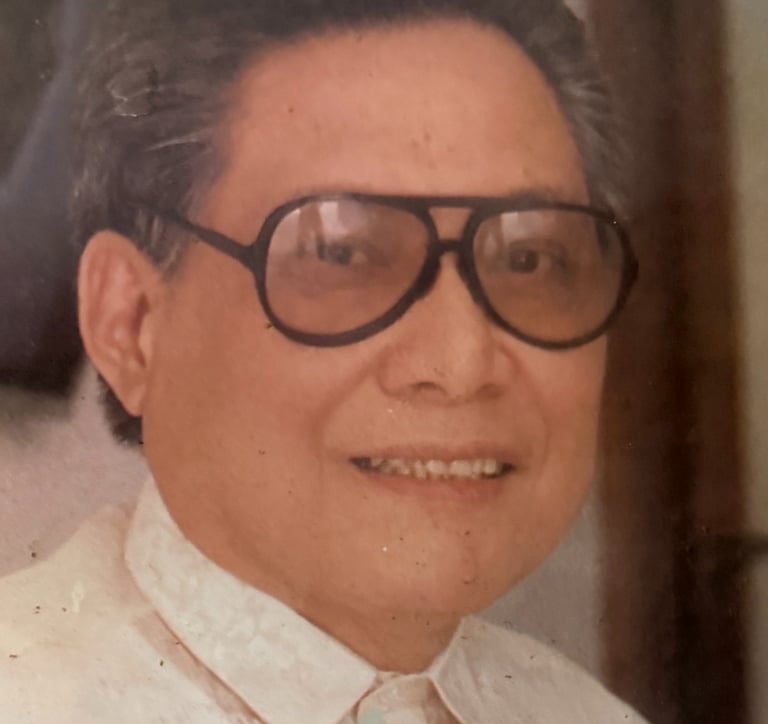
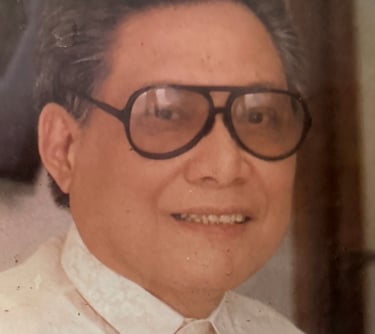
Dr. Alendry P. Caviles, Jr. became what his colleagues would later call the Father of Philippine Hematology. He was a pediatrician, internist, allergologist, immunologist, hematologist, and oncologist, but his main clinical work focused on hematology and immunology. He headed the Hematology Unit of the Dr. Fe del Mundo Medical Center Foundation and became Professor Emeritus at the University of the Philippines.
But his most enduring legacy might be L.I.F.E.—the Leukemic Indigents Fund Endowment, Inc., which he founded in 1995 to support children with leukemia from indigent families. The foundation assists children in achieving remission and provides material, psychosocial, and spiritual support.
It was Allen's way of ensuring that Filipino children—children whose families couldn't afford the catastrophic cost of cancer treatment—would have a chance to live.
A Widow With Seven Children
When Carmen's husband died in 1966, she was 36 years old with seven children to feed and educate. She'd been a housewife, following her husband's career, raising their family. Now she was alone.
She had her profession. She had her know-how. And she had her kuya Allen, who believed n her.
Allen proviided the space—his wife's family home in Malate—and the finances needed to start small. In 1975, Best Drug Industries was born.
Carmen was everything: pharmacist, accountant, sales force. She traveled all around the country to sell. It was hard work, but she had no problem with hard work. She had a practical mind and approached science in a practical way—simplifying things rather than making them complicated.
"She loved being with and helping people," her family remembers. "And that is what she did."
"Kaya ng Pilipino Yan"
Carmen had a saying she repeated often to her children: "Kaya ng Pilipino yan." Filipinos can do it.
She never saw people as superior. She didn't believe Filipinos were less capable than foreigners, less able to manufacture quality products, less worthy of building something that would last. She didn't like intrigue and always felt that Filipinos needed to help one another.
So when competitors switched to plastic bottles because they were cheaper and lighter, Carmen stuck with glass. When opportunities arose to sell to multinationals or take shortcuts that were common in Philippine business, she refused.
Today, BDIP remains one of the few fully Filipino-owned pharmaceutical manufacturers of sterile injectables still operating in the Philippines. In 1975, there were over twenty. Most sold out or closed. Carmen kept going.
The company supplies major hospitals across the country with the core products BDi produced in their Malate Laboratory.
BDI moved to its own facility in Parañaque in 2000. Carmen designed it herself at age 70, navigating FDA requirements and international guidelines.
She did it right.
Parallel Legacies
Dr. Alendry Caviles passed away in 2006, but L.I.F.E. continues his work. Leukemic children from indigent families still receive support because one Filipino doctor decided that poverty shouldn't be a death sentence for Filipino children with cancer.
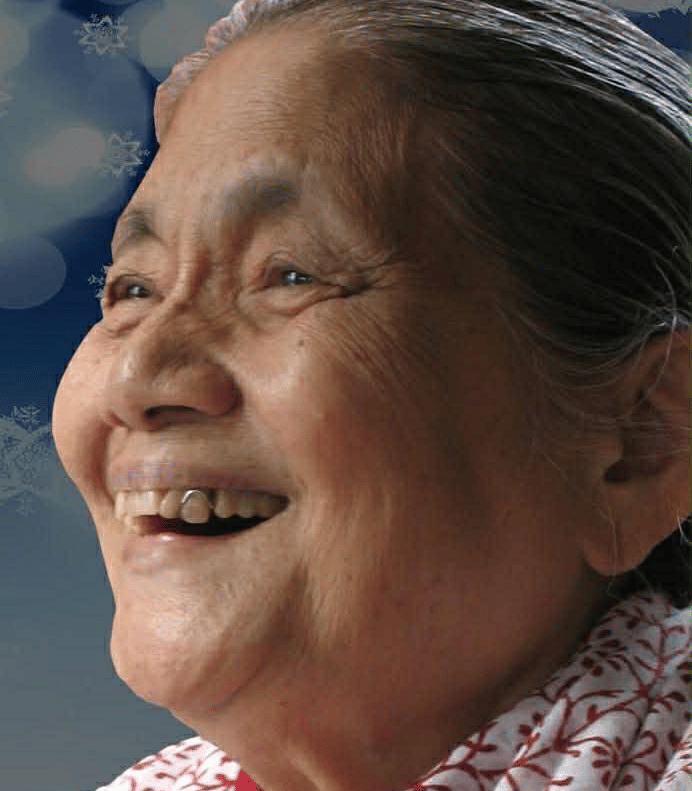
Carmen Caviles Fernandez passed away in 2017 at age 87, but Best Drug Industries continues her work. Filipino hospitals still receive high-quality, locally-manufactured sterile injectables because one Filipino pharmacist decided that Filipinos could build something as good as—or better than—what multinationals offered.
Two siblings. Two institutions. Both born from the same conviction: that Filipinos deserved better, and that Filipinos themselves could provide it.
Allen built his foundation to save Filipino children's lives. Carmen built her laboratory to support Filipino healthcare. Neither chose the easier path. Neither chose to stay abroad where opportunities were more comfortable and rewards more immediate. Neither sold out when the offers came.
They were shaped by the same childhood—by war, by occupation, by watching their country suffer under foreign control. Allen was captured and tortured. Carmen took care of their baby sister while waiting for him to come home.
And when they both had the chance to build lives elsewhere, they came home instead.
Because home was always the Philippines.
The Work Continues
Today, BDIP operates under the leadership Carmen trained. Her daughter Socorro serves as president. Linda manages quality assurance. Carmela oversees production. They maintain the standards their mother set—the glass bottles, the uncompromising quality control, the refusal to cut corners even when it would be easier or more profitable.
And somewhere in a hospital in Metro Manila, a leukemic child receives treatment supported by L.I.F.E., the foundation their Uncle Allen built.
Two legacies. One conviction.
Kaya ng Pilipino.
The work continues.
Quality & Reliability
Delivering safe and effective pharmaceutical solutions.
BEST DRUG INDUSTRIES
AND PHARMA
622 Sta. Cecilia Street, San Antonio Valley 1, 1700 Parañaque City Philippines
© 2024. All rights reserved.