
Glass and Grit: The Business Model That Refused to Break
How Best Drug Industries survived 50 years in Philippine pharma by choosing the harder, more expensive path—and why that decision matters now
3/28/20262 min read
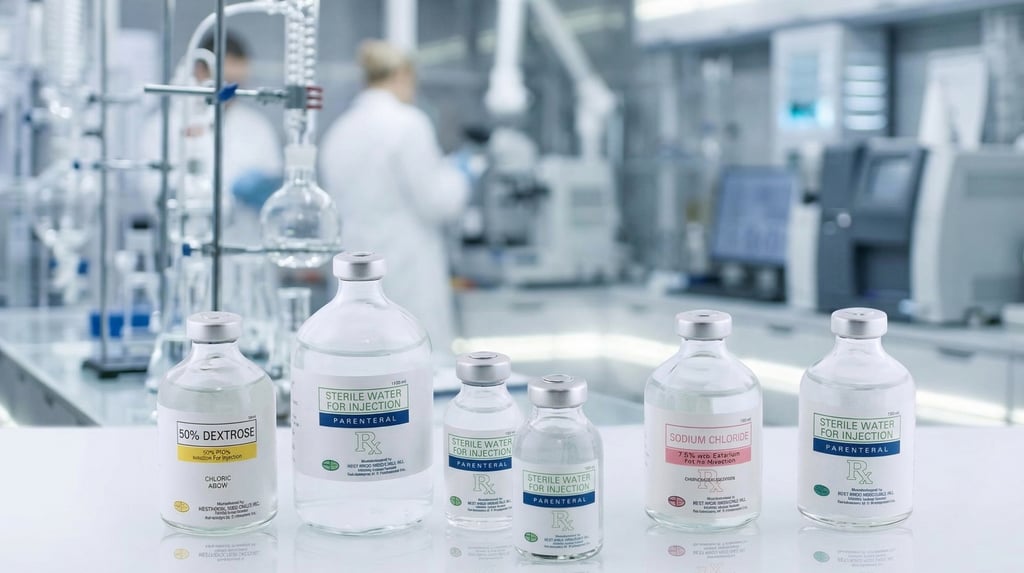
In the packaging room at Best Drug Industries and Pharma's Parañaque facility, workers handle each bottle with practiced care. Glass. Always glass. Heavier than plastic by 40%. More expensive to source. Fragile enough that shipping costs run higher and breakage is an eternal concern.
When BDIP's competitors began switching to plastic bottles—cheaper, lighter, virtually unbreakable—founder Carmen Caviles Fernandez said no. When the cost differential widened further, she said no again. When suppliers pushed hard on the economics, still no.Today, BDIP remains one of the last Philippine-owned pharmaceutical manufacturers using glass bottles for sterile injectables. It's also one of the last Philippine-owned manufacturers still operating.
The Shakeout Nobody Talks About
In 1975, when Carmen Caviles Fernandez registered Best Drug Industries with the SEC, there were over twenty locally-owned pharmaceutical laboratories in Metro Manila manufacturing sterile injectables—dextrose solutions, sodium chloride, water for injection. By 2000, half had closed or been acquired. By 2025, you can count the remaining fully Filipino-owned operations on one hand.
Then there was the operational reality: sterile injectable manufacturing operates on thin margins. The products themselves are commodity items—every dextrose solution is chemically identical to every other. Competition is purely on price and reliability. Most local manufacturers couldn't match multinational pricing while maintaining compliance.
BDIP stayed. And the decision to stick with glass bottles—more expensive, more difficult, more traditional—somehow became part of how they survived.
The Economics of Integrity
"People thought my mother was being stubborn about the glass," says Socorro Fernandez, BDIP's president and Carmen's eldest daughter. "But she understood something about our market position."
What Carmen understood was differentiation in a commodity market.
BDIP couldn't compete on price with multinationals. It couldn't match their distribution networks or their economies of scale. What it could do was stake a claim on quality that went beyond regulatory compliance—quality as a philosophy, not just a checklist.
Glass bottles signal permanence. They're transparent—literally and metaphorically. They don't leach. They don't degrade. They maintain product integrity under temperature variations better than plastic. For Carmen, who'd built the business on a reputation for reliability, glass wasn't just packaging. It was a promise made visible.
It's marketing through material choice. When a hospital purchasing manager sees BDIP's glass bottles, they're seeing a company that chose the harder path. And in an industry where cutting corners can mean contamination, infections, or worse, that signal matters.
Catching the Light
Walk through BDIP's facility today and the glass bottles are everywhere. In the filling room, where they're sterilized and filled under Grade A conditions. In quality control, where samples undergo rigorous testing. In the packaging area, waiting for labels and distribution.
Glass. Clear. Fragile. More expensive than the alternatives. But honest. Uncompromising. Built to maintain integrity under pressure.
But somewhere in the decision to do things right even when it was harder, somewhere in the choice of glass over plastic and integrity over expedience, she built something that lasted. Not because it was easy. Because it was honest.
Fifty years later, in an industry where most local players are gone, BDIP is still here. Still Filipino-owned. Still manufacturing to international standards. Still choosing glass.
The bottles catch the light in the packaging room. Fragile. Clear. Uncompromising.
Still holding.
Quality & Reliability
Delivering safe and effective pharmaceutical solutions.
BEST DRUG INDUSTRIES
AND PHARMA
622 Sta. Cecilia Street, San Antonio Valley 1, 1700 Parañaque City Philippines
© 2024. All rights reserved.